


 PLATFORM UPDATE:


A study on the performance effects and mechanism of a drilling fluid wellbore stabilizer on cement slurry
 *b
*b
Abstract
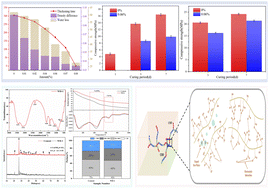
Cementing slurry and drilling fluids are critical to wellbore operations in oil and gas exploration and production, with their performance directly determining cementing quality and long-term well productivity. This study investigates contamination of cementing slurry by individual drilling fluid treatment agents, focusing on a wellbore stabilizer to clarify the underlying mechanisms. At the macro scale, they examined variations in key parameters of cementing slurry, including thickening duration, compressive strength, and rheological behaviors. The findings indicate that while this stabilizer modifies the rheological features of the cementing slurry, it also exerts adverse effects on strength development and thickening capabilities. To explore the intrinsic pollution mechanisms more thoroughly, advanced microscopic testing methods were employed. These methods include Fourier Transform Infrared Spectroscopy (FTIR), thermogravimetric analysis (TG), scanning electron microscopy (SEM), X-ray diffraction (XRD) analysis, and mercury intrusion porosimetry (MIP). The results demonstrate that the contaminated cement paste exhibits a microstructure with elevated porosity and altered crystalline forms of hydration products. This research provides a robust theoretical basis for addressing drilling fluid-induced cementing slurry contamination and guides the optimization of drilling fluid and cementing slurry formulations in engineering practice.
 Please wait while we load your content...


