


 PLATFORM UPDATE:


Advanced oxidation processes (AOPs) for drinking water treatment: a state-of-the-art review on applications, efficacy, and implementation challenges

Abstract
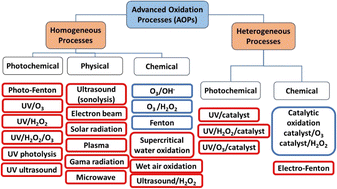
Drinking water treatment plants (DWTPs) face challenges in upgrading their technologies to mitigate health risks and achieve environmental sustainability. Population expansion, limited water sources, and climate change all contribute to these difficulties. The primary reasons for rising water contamination are population growth, urbanization, and industrialization, as well as increased agricultural activities. Micropollutants (e.g., pesticides, pharmaceuticals, industrial chemicals, etc.) are especially problematic because conventional treatment processes do not efficiently remove them. Advanced oxidation processes (AOPs), are required to improve drinking water quality in DWTPs since they are particularly successful at eliminating water pollutants. The purpose of this review is to provide an up-to-date and complete understanding of AOPs' use in drinking water treatment. It also attempts to close this gap by investigating the various forms of AOPs and their efficacy against various water contaminants such as natural organic matter, chlorination disinfection byproducts, and contaminants of emerging concern. Furthermore, this review will evaluate the practical implementation of AOPs, including their suitability for scaling up.
 Please wait while we load your content...


