


 PLATFORM UPDATE:


Efficient inactivation of Microcystis aeruginosa by carbon microtube-supported magnetic photocatalysts under visible light

Abstract
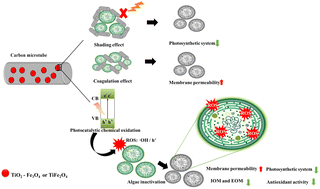
The increasing influx of nutrients (e.g., nitrogen and phosphorus) into freshwater systems is exacerbating eutrophication in natural waterways. To address this issue, a novel magnetic photocatalyst composed of a carbon nanotube core and a titanium dioxide coating (denoted as C–TiO2–Fe3O4 and C–TiFe2O4) is successfully synthesized. Microcystis aeruginosa and microcystin-LR (MC-LR) in eutrophicated water can be efficiently inactivated by the composite via visible light photocatalysis. The incorporation of magnetic Fe significantly enhances cyanobacteria capture and improves the photocatalytic efficiency for algal inactivation and MC-LR breakdown. C–TiFe2O4 exhibits the highest adsorption-photocatalysis performance with an inactivation efficiency of 77.9% after 7 hours. Under optimal conditions (7 h of reaction time, a catalyst dosage of 0.39 g L−1, and an initial algae density of 1 × 10⁶ cells per mL), the MC-LR removal rate is 89.1%. Notably, C–TiFe2O4 maintains exceptional stability and reusability even after five cycles. The composite demonstrates promising potential for treating harmful algal blooms (HABs) across diverse environmental conditions. These findings highlight the viability of C–TiFe2O4 as a sustainable and scalable technology to mitigate HABs and degrade MC-LR in contaminated water systems.
 Please wait while we load your content...


