


 PLATFORM UPDATE:


Magnetic nanocrystalline cellulose-poly(methacrylic acid-co-acrylonitrile) composite: a versatile material for analytical and biological applications

Abstract
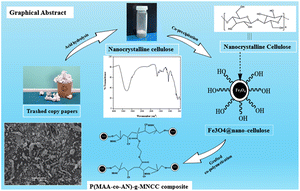
Developing new materials for advanced analytical and biological applications is always a key target in the field of advanced materials. In the present study, a poly(methacrylic acid-co-acrylonitrile)-grafted-magnetic nanocrystalline cellulose composite [P(MAA-co-AN)-g-MNCC] was synthesized through a modified free-radical grafting co-polymerization method using cellulose recovered from waste paper. The synthesized composite was characterized via FTIR spectroscopy, SEM, EDX, and TGA, and its Eg, PZC, and surface area were determined. The as-synthesized P(MAA-co-AN)-g-MNCC was studied as an adsorbent for the removal of gallic acid (GA) from aqueous environments and as an antimicrobial and antioxidant agent. The influence of various experimental factors, including contact time, pH, temperature, and GA concentration, was investigated to optimize the adsorption process. The adsorption process follows pseudo-second-order kinetics and the Freundlich model with a spontaneous and exothermic nature. Similarly, the synthesized adsorbent maintained its excellent adsorption capacity when it was recycled and reused for four successive cycles in real samples. The synthesized P(MAA-co-AN)-g-MNCC also displayed good antioxidant and antibacterial activities against the tested pathogenic bacteria. The results indicated that the as-synthesized P(MAA-co-AN)-g-MNCC has the potential to be used as an effective advanced material for wastewater treatment and biomedical applications.
 Please wait while we load your content...


