


 PLATFORM UPDATE:


Interfacial chemistry of biochar-modified cementitious materials: mechanisms of pore structure refinement, chloride immobilization, and carbon sequestration
 *b
*b
Abstract
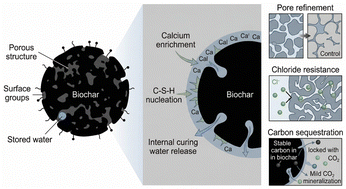
Cement manufacture remains a major source of anthropogenic carbon dioxide, motivating additives that can reduce net climate impact while improving service performance. This review discusses mechanistic evidence on how pyrolyzed biomass solids interact with hydrating Portland cement systems and how those interactions propagate from the particle scale to bulk durability. Three coupled pathways are critically discussed. First, surface oxygen containing groups and high specific area promote calcium enrichment and provide templates for calcium silicate hydrate (CSH) precipitation, shifting hydration kinetics and densifying the interfacial transition zone (ITZ). In parallel, water stored within the hierarchical porosity of the particles can be released during self-desiccation, supporting continued hydration and limiting early age cracking through internal curing. Second, resistance to salt exposure is mainly improved indirectly: matrix densification reduces connectivity and increases tortuosity of transport pathways, lowering apparent diffusion and migration metrics. Possible direct anion uptake by the carbonaceous phase is evaluated as an open question because high pore solution alkalinity tends to render surfaces negatively charged, and reported outcomes vary with feedstock, pyrolysis temperature, and post treatments. Third, climate benefits arise from stable biogenic carbon storage and, in some systems, accelerated carbonation that increases calcium carbonate formation. The review highlights a key durability trade-off for reinforced concrete, where faster carbonation may reduce alkalinity and promote depassivation of steel. Finally, priorities are proposed for rational mix design, including property standardization, advanced nanoscale characterization, and long duration field validation to reconcile laboratory trends with structural risk and life cycle outcomes in practice.
- This article is part of the themed collection: 2026 Reviews in RSC Advances
 Please wait while we load your content...


