


 PLATFORM UPDATE:


Oleuropein derived from olive leaves inhibits the activity of Helicobacter pylori urease: network pharmacology, inhibition kinetics, and mechanistic insights
 *bcd
*bcd
Abstract
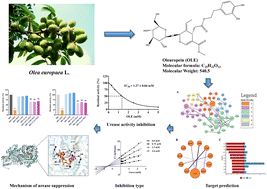
Oleuropein, the major bioactive secoiridoid in olive leaves, has been reported to exhibit anti-Helicobacter pylori (H. pylori) activity. However, its precise molecular targets and the underlying mechanisms, especially its direct interactions with key virulence factors, remain poorly defined. This study aimed to elucidate the inhibitory effect and mechanism of oleuropein on a crude H. pylori urease (HPU) extract using jack bean urease (JBU) as a reference enzyme and by integrating network pharmacology-based target prediction with comprehensive experimental validation. Network pharmacology analysis identified urease subunits within a key functional module of the H. pylori protein–protein interaction network, suggesting urease as a high-priority target of oleuropein. Subsequent enzymatic assays showed that oleuropein inhibited both HPU and JBU activities in a concentration-dependent manner, exhibiting IC50 values of 1.27 ± 0.04 mM and 2.17 ± 0.03 mM, respectively. Kinetic analyses indicated that oleuropein acts as a slow-binding, mixed-type inhibitor of HPU activity and a slow-binding, noncompetitive inhibitor of JBU activity, revealing distinct interaction patterns with bacterial and plant ureases. Protection and reactivation experiments using thiol-containing reagents demonstrated that the inhibition is reversible and involves interaction with sulfhydryl groups at the active site of urease. Consistent with these findings, molecular docking results suggested that oleuropein binds in the vicinity of the flap region of HPU and forms stabilizing hydrogen bonds and hydrophobic interactions with key residues, including CYS321, which is critical for maintaining active-site conformation. In conclusion, this study provides the first systematic evidence that oleuropein acts as an effective, reversible, and slow-binding inhibitor of HPU activity, possibly involving interactions with thiol-containing residues at or near the enzyme's active site. These findings offer a mechanistic explanation for the anti-H. pylori effects of oleuropein and support its potential as a natural lead compound for the development of urease-targeted interventions against H. pylori-associated gastrointestinal diseases.
 Please wait while we load your content...


