


 PLATFORM UPDATE:


Electronic structure analysis of borylenes and their role in small molecule activation

Abstract
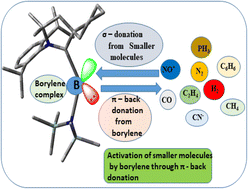
The activation of small molecules by non-metal-based systems has emerged as a compelling area of study, particularly with respect to main-group element chemistry as an alternative to transition metal catalysis. Here, we investigate the activation of two classes of small molecules by the CAAC-stabilized borylene species CAAC–B–N(SiMe3)2. Type A molecules include CO, NO+, C2H4, PH3, CN−, and N2, while type B includes CH4, C6H6, and H2. A series of computational analyses have been carried out to elucidate the electronic structure and bonding characteristics of the borylene complexes. Energy decomposition analysis and frontier molecular orbital investigation reveal that both types of small molecules engage in significant donor–acceptor interactions with the borylene center. Specifically, in type A complexes, there is a notable donation of electron density from the substrate into the vacant p-orbital of boron, accompanied by π-back donation from the filled orbitals of the borylene into the acceptor orbitals of the small molecule. In contrast, type B complexes are characterized predominantly by π-backdonation from the borylene into the empty σ* orbitals of the small-molecule substrates. These findings provide an insight into the reactivity of low-valent boron species and underscore their potential in small-molecule activation chemistry.
 Please wait while we load your content...


