


 PLATFORM UPDATE:


Molecular and materials design for efficient solar energy conversion: a review of photochemical technologies
 c
Jan Mohammad
Mir
*d
and
c
Jan Mohammad
Mir
*d
and
Abstract
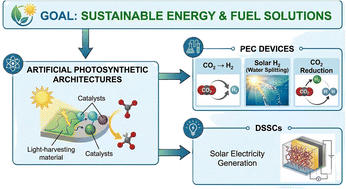
The inexorable rise in global energy demand, coupled with the pressing imperative to mitigate anthropogenic climate change, has catalyzed unprecedented research effort into renewable energy sources. Photochemistry, the study of chemical reactions initiated by light, is fundamentally shaping this landscape, particularly in solar energy conversion. This review provides a comprehensive and critical analysis of current trends in photochemistry that are directly enabling the development of next-generation renewable energy technologies. We delve into the operational principles, recent advances in materials, and persistent challenges across three pivotal photochemical systems: photoelectrochemical (PEC) devices, artificial photosynthetic systems for solar fuel production, and dye-sensitized solar cells (DSSCs). The discourse highlights the strategic shift from scarce, noble-metal-based components towards earth-abundant alternatives, the integration of molecular and solid-state systems in hybrid architectures, and the critical pursuit of long-term operational stability. While significant progress has been made in understanding charge transfer dynamics and tailoring material properties at the nanoscale, the path to widespread commercialization necessitates continued interdisciplinary innovation to overcome efficiency, durability, and scalability hurdles. This critical evaluation of the current state of the art aims to illuminate both the remarkable achievements and the fundamental scientific questions that remain at the forefront of photochemical energy research.
- This article is part of the themed collection: 2026 Reviews in RSC Advances
 Please wait while we load your content...


