


 PLATFORM UPDATE:

Bioactive metabolites from cultures of the entomopathogenic fungus Pleurocordyceps ophiocordycipiticola TBRC-BCC 9612

Abstract
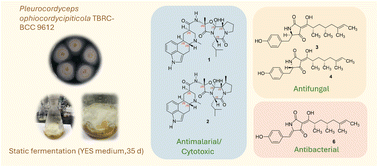
Pleurocordyceps ophiocordycipiticola TBRC-BCC 9612, an entomopathogenic fungus collected from Khao Yai National Park, Thailand, was investigated for its secondary metabolites. Large-scale fermentation, followed by multistep chromatographic separation, resulted in the isolation of seven new compounds, including an ergot-type alkaloid (dihydroergopleurine, 2), three tetramic acid derivatives (pleurocordines A–C, 4–6), two acyclic terpenoids (7 and 8), and a dihydroisobenzofuran derivative (9), along with twelve known compounds. The structures of the new compounds were elucidated based on spectroscopic analyses, including 1D and 2D NMR, HRMS, and ECD data. Selected compounds were evaluated for antimalarial activity against Plasmodium falciparum K1, antibacterial activity against Bacillus cereus, Staphylococcus aureus, and Acinetobacter baumannii, antifungal activity against phytopathogens (Alternaria brassicicola and Colletotrichum acutatum), as well as cytotoxicity toward cancerous (MCF-7, NCI-H187) and non-cancerous (Vero) cells. Among them, ergot alkaloids dihydroergosine (1) and dihydroergopleurine (2) showed antimalarial and cytotoxic activities, while pleurocordine C (6) demonstrated antibacterial and weak cytotoxic effects. 14-Nor-epicoccarine A (3) and pleurocordine A (4) exhibited moderate antifungal activity, and the known akanthomycin showed broad-spectrum bioactivity but lacked selectivity between cancerous and normal cells. These findings expand the chemical diversity known from P. ophiocordycipiticola and highlight several compounds with promising biological profiles for further pharmacological study.
 Please wait while we load your content...


