


 PLATFORM UPDATE:


Clinical potential for infected wound care: synergistic photothermal-photodynamic therapy using a conjugation-bridge modulated D–A–D porous organic polymer

Abstract
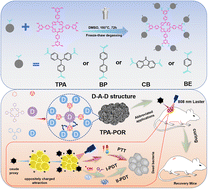
Porphyrin-based photosensitizers (PSs) often suffer from aggregation-caused quenching (ACQ) due to strong π–π stacking, which severely compromises their therapeutic activity. To address this, we leverage the inherently rigid and distorted frameworks of porous organic polymers (POPs) to physically impede such detrimental stacking, thereby preserving the photoactivity of the embedded porphyrin units. By employing a conjugation-bridge engineering strategy, we synthesized a series of porphyrin-based conjugated microporous polymers (CMPs). Among them, the optimal material, TPA-POR, is constructed from an electron-donating TPA unit, specifically, 1,1′,1″-(nitrilotris(benzene-4,1-diyl))tris(ethan-1-one) and electron-accepting triazine nodes, denoted as 6,6′,6″,6‴-(porphyrin-5,10,15,20-tetrayltetrakis(benzene-4,1-diyl))tetrakis(1,3,5-triazine-2,4-diamine). In this architecture, the porphyrin components serve as the electron-donor cores linked to the triazine units, consistent with their well-known role as PSs. This molecular design gives TPA-POR a distinct donor–acceptor–donor (D–A–D) topology. This rational design confers multiple integrated advantages that synergistically address the key challenges in phototherapy. The inherently positive charge of the structure allows for precise electrostatic targeting to bacterial surfaces, which not only concentrates the therapeutic agent but also critically shortens the diffusion path for short-lived ROS, maximizing their localized impact. TPA-POR exerts its antibacterial effect through dual photodynamic pathways. Its Type I mechanism efficiently generates ROS, such as hydroxyl radicals (˙OH), enabling effective therapy even in hypoxic microenvironments. Concurrently, the Type II pathway provides complementary activity under oxygen-replete conditions. This dual capability reduces reliance on ambient oxygen, overcoming a key limitation of conventional photodynamic therapy. Furthermore, these photodynamic actions are synergized by the material's intrinsic photothermal properties and its rigid, nanostructured surface, which promotes physical interaction with bacteria. Together, these integrated mechanisms ensure potent and reliable efficacy across diverse oxygen tensions. Consequently, TPA-POR exhibits potent antimicrobial activity, achieving near-complete inactivation of both S. aureus and E. coli at a low concentration of 300 µg mL−1 and effectively promoting the healing of infected wounds in vivo. This work demonstrates a multifaceted design that integrates the anti-quenching scaffold of POPs with a functional D–A–D architecture to overcome key limitations in photodynamic therapy.
 Please wait while we load your content...


