


 PLATFORM UPDATE:


Recent progress in the fabrication of nanocomposite-derived superhydrophobic coatings for improved concrete lifespan: insights into recent advancements, interfacial chemistry and tribological performance

Abstract
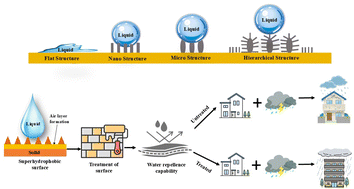
Concrete structures and built infrastructure are essential for modern civilization due to the increasing urbanization, population growth, and corresponding infrastructure needs. However, extreme weather and prolonged exposure to humidity can lead to the irreversible degradation of various materials used in built infrastructure, primarily due to water penetration and freeze–thaw cycles. This review examines the effectiveness and successful application of protective surface coatings on concrete, a major construction material. Superhydrophobic coatings meet the demands of various applications, offering anti-microbial resistance, corrosion resistance, contamination prevention, water repellence, drag reduction, anti-icing, anti-fogging, anti-adhesion features, and self-cleaning capabilities. Nanocomposites are known for their improved mechanical, thermomechanical, and thermal properties compared with their base materials, drawing considerable interest from researchers worldwide. The key problem of insufficient mechanical and chemical durability of superhydrophobic materials when applied on concrete surfaces is pointed out, and the application trend of these materials is projected. In addition, the tribology discussed in this review primarily addresses their mechanical durability, wear resistance, and long-term performance. This review also covers recent advancements in fabrication techniques, current limitations, and testing methods for superhydrophobic concrete. The effects of hydrophobic treatments on the hydration process, which is crucial for the development of compressive strength in concrete, are explored. Furthermore, successful case studies of superhydrophobic coatings for protecting concrete structures are presented. To develop maintenance strategies, prevent failures, and adhere to industrial standards, it is vital to assess the durability and characteristics of these coatings while considering factors such as mechanical stress, environmental exposure, and other qualitative aspects. The overall findings from this review could facilitate enhancing the advancement of durable, efficient concrete materials.
 Please wait while we load your content...


