Issue 13, 2026, Issue in Progress

CPB@PLH NPs accelerate wound healing by antibacterial and anti-inflammatory effects

Abstract

Diabetic wounds are a severe complication of diabetes, with their non-healing nature closely associated with infection, oxidative stress, and the inflammatory microenvironment. To address the limited therapeutic efficacy of conventional antibiotics, which often lead to drug resistance and offer functionality, this study constructed a multifunctional composite nano-platform (CPB@PLH NPs) based on carboxylated Prussian blue nanoparticles (CPB NPs) and a novel antimicrobial peptide of PLH054001130. This platform integrates the broad-spectrum antimicrobial and biofilm-disrupting capabilities of PLH with the antioxidant and anti-inflammatory functions of CPB NPs, enabling synergistic “anti-bacteria–anti-inflammation” therapy. In vitro assay demonstrated the over 99% antibacterial rate of CPB@PLH NPs against methicillin-resistant Staphylococcus aureus (MRSA), effective reactive oxygen species (ROS) scavenging, inflammation suppression, and endothelial cell migration acceleration. In a mouse model of MRSA-infected wounds in the context of streptozotocin (STZ)-induced diabetes, CPB@PLH NPs significantly promoted wound closure by enhancing collagen deposition, stimulating angiogenesis, and modulating the expression of inflammatory cytokines. This study presents an innovative approach for comprehensively treating chronically infected diabetic wounds, offering excellent biocompatibility.
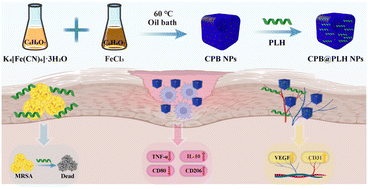
Graphical abstract: CPB@PLH NPs accelerate wound healing by antibacterial and anti-inflammatory effects

Supplementary files

Transparent peer review

To support increased transparency, we offer authors the option to publish the peer review history alongside their article.

View this article’s peer review history

Article information

Article type
Paper
Submitted
08 Dec 2025
Accepted
09 Feb 2026
First published
02 Mar 2026
This article is Open Access
Creative Commons BY-NC license

RSC Adv., 2026,16, 11633-11646

CPB@PLH NPs accelerate wound healing by antibacterial and anti-inflammatory effects

Y. Li, A. Tong, P. Xu, L. Chang, J. Fan, Z. Shan, C. Tong and B. Liu, RSC Adv., 2026, 16, 11633 DOI: 10.1039/D5RA09475E

This article is licensed under a Creative Commons Attribution-NonCommercial 3.0 Unported Licence. You can use material from this article in other publications, without requesting further permission from the RSC, provided that the correct acknowledgement is given and it is not used for commercial purposes.

To request permission to reproduce material from this article in a commercial publication, please go to the Copyright Clearance Center request page.

If you are an author contributing to an RSC publication, you do not need to request permission provided correct acknowledgement is given.

If you are the author of this article, you do not need to request permission to reproduce figures and diagrams provided correct acknowledgement is given. If you want to reproduce the whole article in a third-party commercial publication (excluding your thesis/dissertation for which permission is not required) please go to the Copyright Clearance Center request page.

Read more about how to correctly acknowledge RSC content.

Social activity

Spotlight

Advertisements