


 PLATFORM UPDATE:


Aluminium MOF as a selective sensor for atrazine with docking and computational insight

Abstract
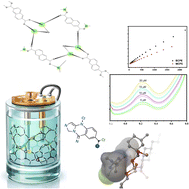
An aluminium-based metal–organic framework (Al-MOF), constructed using 2,6-naphthalenedicarboxylic acid (2,6-NDC) as a linker, was synthesized for the selective electrochemical detection of atrazine (ATZ) in water. This study explores the molecular interactions between the Al-MOF and ATZ, supported by docking simulations and quantum chemical calculations, which reveal a strong binding affinity and electronic interaction. The sensor electrode modified with Al-MOF exhibited prominent enhancement in the peak current responses for ATZ compared to the bare carbon paste electrode, attributed to improved sensitivity and selectivity. Its performance was consistent across diverse water samples, with reproducibility demonstrated over multiple fabricated electrodes. Optimal detection was achieved using 0.1 M HCl as the supporting electrolyte, while interference studies confirmed a selective response for ATZ over other pesticides. The analysis revealed that the detection process is predominantly adsorption-controlled, and the method proved viable for real-world monitoring in drinking water and wastewater. Structural, compositional, and morphological characterization validated the integrity and stability of the synthesized Al-MOF. The overall findings highlight the practical utility of the Al-MOF-based sensing platform as an affordable and reliable approach for the environmental monitoring of persistent herbicides such as ATZ.
 Please wait while we load your content...


