


 PLATFORM UPDATE:


Sustainable leaching of mixed LIB waste cathode employing a deep eutectic solvent composed of l-proline and lactic acid

Abstract
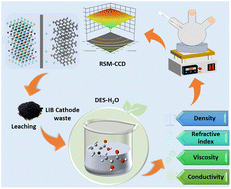
The rapidly increasing consumption of lithium-ion batteries (LIBs), coupled with the growing volume of end-of-life batteries, underscores the urgent need for sustainable and environmentally benign recycling technologies. While deep eutectic solvents (DESs) have emerged as promising green alternatives to traditional mineral acids and organic solvents, the use of amino acid-based DESs for metal recovery from LIB waste remains largely unexplored. This study addresses this gap by developing a novel L-proline–lactic acid DES blended with 30% water specifically designed for efficient leaching of lithium, cobalt, and nickel from spent LIB cathode materials. The synergistic interaction between L-proline and lactic acid creates a unique hydrogen-bonding network that enhances metal dissolution, marking a significant advancement over conventional DES formulations. Response Surface Methodology (RSM) was employed to systematically assess and optimize the effects of temperature, leaching time, and stirring speed, leading to remarkably high leaching efficiencies under mild conditions. Experimental findings recorded leaching efficiencies of 98.32% Li, 100% Co, 99.07% Ni and, 85.63% Fe, with minimal dissolution of Mn under optimized conditions, suggesting the selectivity of the DES for Li, Co, Ni and Fe over Mn. This indicates the superior performance of amino acid-based DESs. Kinetic modelling further revealed that the leaching follows a chemical reaction-controlled mechanism, confirming direct chemical interaction between metal ions and the DES. Overall, this study showcases an innovative and environmentally friendly DES-water system that significantly achieves sustainability, efficiency, and mechanistic comprehension of lithium-ion battery recycling.
 Please wait while we load your content...


