


 PLATFORM UPDATE:

Unveiling the rheological secrets of hydrogels: from lab to clinical translation
 †*ab
and
†*ab
and
Abstract
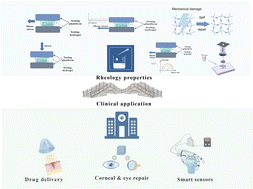
Hydrogels have garnered significant attention in the biomedical field due to their high-water absorption capacity, flexibility, and biocompatibility. However, the translation of laboratory achievements related to hydrogels into clinical applications remains slow. Core reasons for this phenomenon lies in the persistent gap between key design elements—such as material selection, manufacturing techniques, and rheological properties—and the practical requirements of clinical applications. Rheology, by investigating the deformation and flow characteristics of hydrogels, provides a critical tool for understanding their mechanical properties and dynamic behaviors. Consequently, the rheological properties of hydrogels serve as a vital “bridge” connecting laboratory research with clinical practice. This study highlights the pivotal role of rheology in the clinical translation of hydrogels. Initially, it analyzes the influence of rheological parameters, including storage modulus, compressive modulus, and viscosity on hydrogel performance, which respectively reflect elasticity, resistance to compression, and flow behavior. Additionally, the article summarizes biomedical applications of hydrogels, such as drug delivery systems, corneal and lens repair, and smart sensors. Future research should focus on the clinical translation of hydrogel rheological properties, ensuring their efficacy, stability, and controllability through systematic studies to meet diverse clinical demands. By integrating advanced biofabrication technologies, the widespread clinical adoption of hydrogels can be further accelerated.
 Please wait while we load your content...


