


 PLATFORM UPDATE:


Analysis of metabolic characteristics of epristeride in zebrafish based on LC-Q-TOF MS and its potential applications in doping control
 †a
Bing
Liu
*a
†a
Bing
Liu
*a
Abstract
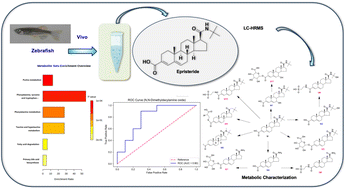
5α Reductase inhibitors (finasteride and dutasteride) have been classified as monitored substances by the World Anti-Doping Agency (WADA) due to their potential abuse as masking agents for anabolic-androgenic steroids. As a member of the same class of inhibitors, epristeride shares a similar pharmacological mechanism of action and thus poses an inherent risk of abuse. However, current research on the metabolic characteristics of epristeride remains limited, which hinders its effective monitoring in anti-doping practices. In this study, a zebrafish model combined with liquid chromatography-quadrupole-time-of-flight mass spectrometry (LC-Q-TOF MS) was employed to systematically investigate the metabolic transformation of epristeride in vivo. Additionally, omics analysis was utilized to elucidate the effects of epristeride administration on endogenous metabolic pathways. A total of 11 epristeride metabolites were successfully identified, including 4 phase I metabolites and 7 phase II metabolites, primarily involving metabolic reactions such as oxidation, methylation, and glucuronide conjugation. Omics analysis revealed that N,N-dimethyldecylamine oxide (DDAO) with an AUC value of 0.80 could serve as a potential biomarker. Pathway enrichment analysis indicated that epristeride significantly perturbed purine metabolism and aromatic amino acid biosynthesis. These findings provide a more precise understanding of the metabolic fate of epristeride in organisms, offering a scientific basis for the development of accurate detection methods.
 Please wait while we load your content...


