


 PLATFORM UPDATE:


Synthesis, spectroscopic characterization, and DFT-assisted molecular docking analysis of novel 1,3,4-oxadiazole–1,2,3-triazole hybrids with antimicrobial and cytotoxicity potential
 ab
Jay B.
Maheta,
a
Yogesh O.
Bhola,
*a
Bhavesh N.
Socha,
c
Prince A.
Dave
a
and
Sureshkumar B.
Koradiya
a
ab
Jay B.
Maheta,
a
Yogesh O.
Bhola,
*a
Bhavesh N.
Socha,
c
Prince A.
Dave
a
and
Sureshkumar B.
Koradiya
a
Abstract
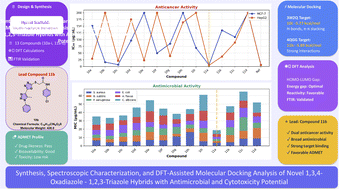
A novel series of heterocyclic derivatives (10a–i, 11a–d) was successfully synthesized and evaluated through a synergistic combination of density functional theory (DFT), molecular docking, and in vitro biological assays to explore their potential as multifunctional therapeutic agents. Theoretical investigations revealed that compounds 11b, 10f, 10i, 11c, and 10d exhibited favourable electronic properties, including optimal HOMO–LUMO energy gaps and high electrophilicity indices, which correlate with enhanced chemical stability and reactivity. Molecular docking analysis demonstrated strong binding affinities toward Thymidylate Kinase (4QGG) and Epidermal Growth Factor Receptor (EGFR, 3W2Q), with compound 11b showing the best antimicrobial interaction energy (−5.89 kcal mol−1), while 10i and 11c showed strong binding complementarity with the EGFR active sites, suggesting potent cytotoxicity potential. In vitro results further validated the computational predictions. Compound 10i exhibited exceptional cytotoxicity against both MCF-7 (IC50 = 1.2 ± 0.5 µM) and HepG2 (IC50 = 0.8 ± 0.2 µM) cell lines, demonstrating submicromolar potency against liver cancer cells and representing the most active compound in the entire series. Additionally, compound 10i showed significant EGFR inhibition (IC50 = 0.93 ± 0.25 µM), comparable to doxorubicin, whereas 11c displayed excellent EGFR inhibition (IC50 = 0.33 ± 0.06 µM), approaching erlotinib's potency. Furthermore, 11b exhibited potent and broad-spectrum antimicrobial activity (MICs of 1.89–4.61 µg mL−1), surpassing those of ciprofloxacin and griseofulvin. The combined computational and experimental findings highlight the significance of nitrogen- and oxygen-rich heteroaromatic functionalities, which enhance electronic distribution, molecular stability, and target recognition. Overall, compounds 10i, 11b, and 11c emerged as promising lead candidates with cytotoxicity and antimicrobial activities, with 10i demonstrating particularly remarkable broad-spectrum cytotoxicity efficacy, providing a rational framework for the design and development of next-generation multifunctional therapeutic agents.
 Please wait while we load your content...


