


 PLATFORM UPDATE:


Transforming plastic waste into liquid fuels: novel upgrading of polypropylene pyrolysis oil and its utilization in a diesel engine

Abstract
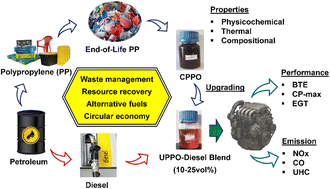
Pyrolysis of end-of-life polypropylene (EOL-PP) items into polypropylene pyrolysis oil (PPO) is a scalable, economically feasible, and environmentally acceptable waste-to-energy pathway. The poor stability (e.g., storage and oxidative) and inferior physicochemical properties (e.g., low flash point) of crude PPO (CPPO) mandate an inexpensive, scalable, and eco-friendly upgrading method to enable its use as engine fuel. This work reports a novel upgrading of CPPO into upgraded PPO (UPPO) by sequentially removing the excessively volatile and chemically unstable components in a two-step process. The chemical composition of the volatile fraction (b.p. <150 °C) resembled that of gasoline and the heavy naphtha fraction, which promises to diversify the applications and markets of PPO. The physicochemical properties and spectral characteristics of CPPO and UPPO were analyzed to quantify the improvements in fuel properties. UPPO showed noticeably better physicochemical properties than CPPO. The UPPO (10–25 vol%)-diesel blends were used in a diesel engine to study the engine performance and emission characteristics, which afforded comparable engine performance (e.g., brake thermal efficiency) and reduced emissions (i.e., NOx, CO, and unburnt hydrocarbons) compared to unblended diesel.
 Please wait while we load your content...


