


 PLATFORM UPDATE:


Low-concentration cholesterol modification enhances Clematis filamentosa Dunn-derived extracellular vesicle-mediated macrophage polarization regulation for acute lung injury therapy
Abstract
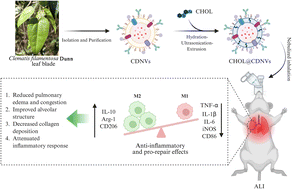
Acute lung injury (ALI) and its severe form, acute respiratory distress syndrome (ARDS), are characterized by an imbalance in M1/M2 macrophage polarization and disruption of the alveolar-capillary barrier. Although plant-derived extracellular vesicles (PEVs) hold therapeutic potential for immunomodulation, their clinical application is limited by poor stability and inefficient delivery. Here, we developed cholesterol-modified nanovesicles (CHOL@CDNVs) from Clematis filamentosa Dunn (CDNVs), a medicinal plant with documented anti-inflammatory properties. Using a thin-film hydration–extrusion method, low-concentration cholesterol modification enhanced the colloidal stability of the vesicles and increased macrophage uptake by 1.6-fold while preserving their ROS scavenging capacity. CHOL@CDNVs effectively suppressed M1 polarization and the secretion of TNF-α/IL-1β, while inducing M2 reprogramming. In an LPS-induced ALI mouse model, CHOL@CDNVs administration reduced pulmonary edema (37% lower wet/dry weight ratio) and fibrosis (67% reduction in collagen deposition) without inducing hepatotoxicity. These therapeutic effects were mediated by a shift from M1 to M2 macrophage polarization and the resolution of inflammatory properties. This study establishes cholesterol modification as a dual-functional strategy that simultaneously enhances the stability and immunoregulatory efficacy of plant-derived nanovesicles, offering a promising advance toward precision therapy for ALI/ARDS.
- This article is part of the themed collection: 2026 RSC Advances Popular Advances Collection
 Please wait while we load your content...


