


 PLATFORM UPDATE:


Nanoremediation of arsenic from contaminated water by new generation graphene-based nanomaterials: a comprehensive review
 *f
and
*f
and
Abstract
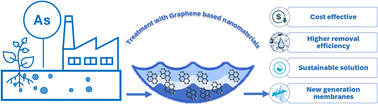
Water contamination by metals and metalloids, particularly arsenic (As), is a serious global issue and a pressing challenge for countries with limited water resources. Since As is derived both from natural sources and human activities, including industrial effluents, agricultural runoff, and domestic sewage water discharges, it poses a severe threat to biodiversity, ecosystems, and human health due to its toxicity, carcinogenicity, and mutagenicity, even at trace levels. Traditional remediation methods for As removal from water media, including coagulation, reverse osmosis, and adsorption, are increasingly popular due to low cost and higher removal efficiency. However, recent advances in adsorption research have focused on the development of nanostructured materials with superior physicochemical properties and higher removal efficiencies compared to conventional treatment methods. The high porosity, low density, mechanical strength, and exceptional electrochemical properties of graphene (G)-based nanomaterials distinguish them from other metallic and other polymeric nanomaterials. These new generation GO-based nanomaterials, such as ultra-thin layers of graphene atoms, 2D materials, and nanofibrous sheets, are also efficient remedies for HMs, particularly As, from wastewater. The efficiency and stability of arsenic removal are further improved by nanocomposites, such as GO-polymer hybrids, GO-chitosan, GO-ZnO, GO-cellulose, Fe-functionalized GO, and reduced GO. For environmental remediation, these advanced nanohybrids offer sustainable, high-performance solutions. The present review synthesizes insights from nearly 200 research papers and review articles indexed in Web of Science, Scopus, and Google Scholar, focusing on As removal from wastewater utilizing graphene-based nanomaterials. It also highlights the sources and toxicity of As, limitations of traditional treatment methods, and the enhanced adsorption capabilities of graphene-derived materials and their composites. Overall, this review provides a concise and integrated perspective on current advancements, existing challenges, and future directions for next-generation graphene-based membrane technologies for effective As remediation.
- This article is part of the themed collection: 2026 Reviews in RSC Advances
 Please wait while we load your content...


