


 PLATFORM UPDATE:


Bridging mechanism and design: modern medicinal chemistry approaches to thymidylate synthase inhibitors

Abstract
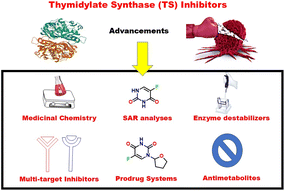
Thymidylate synthase (TS) is a folate-dependent enzyme essential for DNA synthesis and cell proliferation, making it one of the most enduring and clinically validated targets in anticancer chemotherapy. This review provides a comprehensive overview of TS structure, catalytic mechanism, and inhibition modes, emphasizing its central role in the action of classical antimetabolites such as fluoropyrimidines and antifolates. Despite decades of clinical success, drug resistance, toxicity, and limited tumor selectivity continue to challenge TS-targeted therapy. Recent advances in medicinal chemistry have introduced novel heterocyclic scaffolds, particularly oxadiazoles, pyrimidines, and their hybrid analogs, exhibiting improved TS inhibition, cytotoxic selectivity, and multitarget potential. Structure–activity relationship (SAR) analyses reveal key molecular features governing potency, including halogen substitution, π–π stacking interactions, and bioisosteric modifications. Moreover, innovative strategies such as noncatalytic enzyme destabilizers, hybrid multitarget inhibitors, and biomarker-guided prodrug systems are reshaping the future of TS-directed therapeutics. This review highlights the structural evolution of TS inhibitors from classical to next-generation agents, bridging mechanistic understanding with the design of safer and more effective anticancer drugs.
- This article is part of the themed collection: 2026 Reviews in RSC Advances
 Please wait while we load your content...


