


 PLATFORM UPDATE:


A closed-loop strategy for composting: using biochar and fulvic acid derived from manure or straw to mitigate ammonia emission and enhance humification
 *a
*a
Abstract
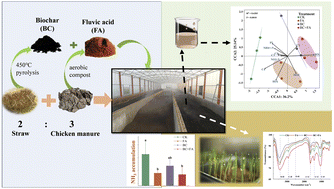
Biochar (BC) and biostimulants, such as fulvic acid (FA), have proven to have potential in composting. They have been shown to reduce nitrogen loss and enhance the quality of compost, benefitting the composting of manure and straw. However, the synergistic effects of BC and FA on composting remain largely unelucidated. The present study evaluated the individual and synergistic effects of BC and FA on the composting of chicken manure mixed with straw. Results demonstrated that BC + FA significantly reduced ammonia (NH3) volatilization by 48.11% through the composting process. In addition, BC + FA increased the accumulated temperature and pH and reduced the electrical conductivity of composts. Regarding the final products, the BC + FA treatment increased the contents of total nitrogen and dissolved organic carbon and improved the germination index (GI) by 50%. Concurrently, FA and BC + FA increased the content of humic substances by 12.6% and 12.8%, respectively. The ratio of humic acid to FA increased from 8.2% to 44.9% following the BC + FA treatment compared to that in the control. Furthermore, BC enhanced the fluorescence and humification indices of the composts. Besides, it was revealed that the functional groups present on the surfaces of BC and FA + BC were associated with intermolecular polymerization and aromatization. The Mantel test confirmed that BC + FA effectively reduced the NH3 emissions of this process and enhanced the quality and GI, probably through stimulating the directional transformation of organic matter. This study systematically evaluated the effect of BC and FA in a composting trial and offered a promising and comprehensive strategy for the effective resource utilization of manure and straw.
 Please wait while we load your content...


