


 PLATFORM UPDATE:


Sensitive and rapid DPV detection of urinary homovanillic acid via g-C3N4@nZVI modified carbon paste sensor

Abstract
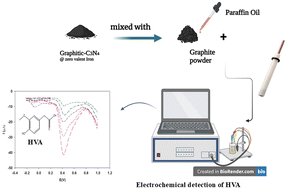
Non-invasive and rapid detection of HVA, a validated urinary biomarker for neuroblastoma and catecholamine-secreting cancers, remains analytically challenging due to its low physiological levels and interference from common urinary components. Herein, a novel electrochemical sensing platform is introduced by integrating a graphitic carbon nitride (g-C3N4) and nanoscale zero-valent iron (nZVI) composite into a carbon paste electrode (CPE) and employing differential pulse voltammetry (DPV) for HVA quantification in urine. The g-C3N4@nZVI composite synergistically enhances electron transfer kinetics and suppresses non-faradaic background current, leading to lower baseline noise and superior signal resolution. Under optimized voltammetric conditions, the sensor exhibits a broad linear response from 2 µM to 100 µM, with a detection limit of 0.978 µM that encompasses physiological urinary HVA levels (8–41 µM). Structural characterization via SEM/EDX confirmed uniform deposition of iron nanoparticles on the g-C3N4 matrix, and electrochemical tests revealed diffusion-controlled, irreversible oxidation of HVA. Analysis of spiked human urine yielded recoveries within 95–98% and intra-day/inter-day precision with RSD < 2%, confirming the method's accuracy and reproducibility. Compared to existing voltammetric platforms, this sensor achieves enhanced selectivity, operates at near-neutral pH without complex buffering, and supports portable deployment. Overall, the g-C3N4@nZVI/CPE with DPV offers a sensitive, fast, and cost-effective tool for point-of-care HVA screening in clinical settings.
 Please wait while we load your content...


