


 PLATFORM UPDATE:


Photocatalytic degradation of dyes by metal sulfide–chitosan based composites: a comprehensive review

Abstract
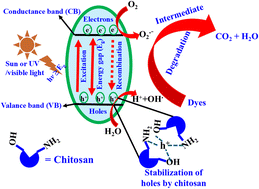
The growing prevalence of synthetic dyes in aquatic environments has intensified the search for sustainable and efficient photocatalytic remediation technologies. Metal sulfide (MS) photocatalysts have attracted considerable interest owing to their strong visible-light absorption and tunable electronic structures. However, their practical application is constrained by rapid charge recombination and photo-corrosion. This review uniquely positions metal sulfide–chitosan (MS–CS) composites as a next-generation solution by critically elucidating the synergistic interplay between the functional groups of chitosan (CS) and metal sulfide band structures that remain insufficiently addressed in existing literature. Unlike conventional polymer-semiconductor systems, chitosan not only enhances dye adsorption and nanoparticle stability but also actively regulates interfacial charge transfer and reactive oxygen species (ROS) generation. This review systematically analyzes photocatalytic mechanisms, structure–property relationships, heterojunction engineering, and performance of MS–CS composites under different environments, while identifying key design parameters governing performance under realistic conditions. By integrating material chemistry with mechanistic insights and application-oriented perspectives, this work bridges current knowledge gaps and establishes MS–CS composites as a viable and sustainable platform for advanced wastewater treatment.
- This article is part of the themed collection: 2026 Reviews in RSC Advances
 Please wait while we load your content...


