


 PLATFORM UPDATE:


Development of novel salicylic acid derivatives with dual anti-inflammatory and anti-arthritic potentials: synthesis, in vitro bio-evaluation, and in silico toxicity prediction with molecular modeling simulations
 *cd
*cd
Abstract
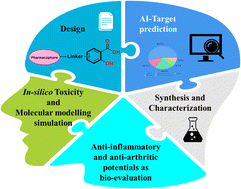
Development of anti-inflammatory agents targeting COX and 5-LOX, along with anti-arthritic agents, is a crucial approach in drug discovery. In this study, we designed and synthesized novel azomethine salicylic acid derivatives 2–9 by condensing 4-aminosalicylic acid with various formyl or ketone groups attached to benzylidene or heterocyclic cores. The reaction was carried out under reflux conditions utilizing acetic acid as the solvent. Initially, target prediction was performed, and the results indicated that these derivatives have potential as inhibitors of enzymes, proteases, and kinases. Furthermore, the designed derivatives underwent evaluation to assess their anti-inflammatory activity through COX-1, COX-2, and 5-LOX, as well as their anti-arthritic properties. Three derivatives 2, 4, and 9 demonstrated the most significant activity, with IC50 values of 10.16 ± 0.18, 9.68 ± 0.17, and 10.13 ± 0.18 µg mL−1 for COX-1, and 7.68 ± 0.05, 7.32 ± 0.04, and 7.66 ± 0.05 µg mL−1 for COX-2, respectively. These results exhibited superior activity compared to Aspirin, which had IC50 values of 11.21 ± 0.12 and 8.45 ± 0.05 µg mL−1, while demonstrating competitive activity relative to Naproxen (IC50 = 8.13 ± 0.14 and 6.18 ± 0.04 µg mL−1) and Indomethacin (IC50 = 7.16 ± 0.05 and 5.47 ± 0.04 µg mL−1) for COX-1 and COX-2, respectively. For 5-LOX, compound 4 demonstrated the most potent activity, with an IC50 value of 11.64 ± 0.20 µg mL−1. This value is comparable to that of naproxen (IC50 = 9.65 ± 0.17 µg mL−1) and zileuton (IC50 = 8.43 ± 0.05 µg mL−1), while demonstrating greater efficacy than aspirin (IC50 = 13.68 ± 0.13 µg mL−1). These findings suggest that compound 4 may serve as a potent inflammatory mediator with multiple targets. In terms of arthritic activity, the synthesized derivatives demonstrated the ability to inhibit protein denaturation and proteinase activity, exhibiting moderate inhibitory effects. Finally, in silico toxicity predictions were conducted, demonstrating a safer profile compared to the utilized drugs. Additionally, docking simulations were performed for the most active derivatives, revealing higher binding affinities, supported by hydrogen bonding, arene-cation interactions, and hydrophobic interactions.
- This article is part of the themed collection: 2025 RSC Advances Popular Advances Collection
 Please wait while we load your content...


