


 PLATFORM UPDATE:


Biodegradable Prussian blue/manganese dioxide core–shell nanoparticles with open cages for imaging-guided chemo-photothermal combined therapy of cancer cells
 *a
and
*a
and
Abstract
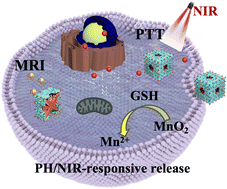
Imaging-guided diagnostic and therapeutic strategies have attracted significant attention in the field of nanomedicine. To develop more efficient theranostic nanoplatforms, this study designed and synthesized Prussian blue (PB)/manganese dioxide (MnO2) core–shell nanoparticles with an open cage-like nanostructure (denoted as PBMn core–shell nanoparticles). In this nanoplatform, the PB core serves as a photothermal agent for near-infrared laser-induced photothermal therapy (PTT) against tumor cells, owing to its strong absorption in the NIR region and excellent stability. The MnO2 shell, formed via the reduction of KMnO4 by glucose, not only effectively modulates the size and optical properties of the PB core but also significantly depletes the intracellular glutathione (GSH) level in tumor cells. Moreover, the Mn2+ generated from the reduction of MnO2 by highly concentrated GSH in the tumor microenvironment synergistically enhance both T1- and T2-weighted magnetic resonance imaging (MRI) signals, enabling high-contrast tumor imaging. Based on these features, the PBMn core–shell nanoparticles have been successfully applied for MRI-guided chemo-photothermal combination cancer therapy.
 Please wait while we load your content...


