


 PLATFORM UPDATE:

Hexane extract of Plumbago europaea L. aerial parts: phytochemical screening and antibacterial activity

Abstract
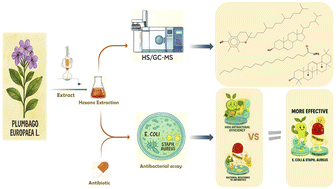
Plumbago europaea L. is a plant that is commonly used in Syrian folk medicine. This study aimed to identify the chemical constituents of the hexane extract from the plant's aerial parts and evaluate its antibacterial efficacy for the first time. The aerial parts (flowers and leaves) of the plant were collected from a mountainous area in Lattakia Governorate, Syria. This was followed by extraction using the Soxhlet apparatus with hexane solvent. Then the chemical composition of this extract was determined using a Headspace Gas Chromatography–Mass Spectrometry apparatus (HS/GC-MS). Moreover, the antibacterial activity of the hexane extract was studied using the disc diffusion method against two types of bacteria: Escherichia coli (Gram-negative) and Staphylococcus aureus (Gram-positive). 63 and 52 compounds were identified in the hexane extract of both flowers and leaves, respectively. The main compounds in the flower extract were campesterol (7.31%), heneicosanol (6.81%), and phytyl decanoate (6.13%) β-amyrone (5.77%), β-amyrin (5.67%), plumbagin (5.67%). While the main compounds in the leave extract were campesterol (10.26%), heneicosanol (9.00%), β-amyrone (8.33%), plumbagin (7.75%). In addition, the disc diffusion test findings also demonstrated that the hexane extract of P. europaea L. aerial parts was clearly efficient against the tested bacteria at varying doses. Additionally, the flower extract had a stronger effect on the studied bacteria than the leaves, and it beat different antibiotics. The intriguing search results lay the foundation for further chemical and biological research that will help identify beneficial new uses for this plant in medicine and nutrition.
 Please wait while we load your content...


