


 PLATFORM UPDATE:


Enzyme therapy as a promising strategy to overcome multi-drug resistance in pathogens: current advances, key challenges, and future directions

Abstract
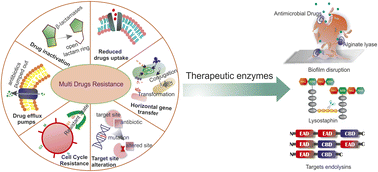
Multi-drug resistance (MDR) poses a serious threat to global health due to increasing death rates, as antibiotics are rendered ineffective, resulting in fatal infections as an outcome of treatment failures, which make them cost-ineffective in the healthcare sector. The excessive use of antibiotics in therapies for human diseases, along with their usage in farm animals and fishes, causes selective pathogens to develop resistance against multiple drugs. In the era of growing drug resistance, enzyme therapy is emerging as a valuable alternative. Enzymes such as endolysins, DNase I, dispersin B, nanozymes, lysostaphin and alginate lyases are involved in combating multidrug-resistant pathogens. These enzymes can degrade the peptidoglycan layer, disrupt biofilms and neutralize resistance factors. Although current advantages such as phage-derived lysins, biofilm-degrading enzymes, enzyme-antibiotic synergy, targeted delivery systems and engineered enzymes are explored, challenges such as low stability, unclear delivery mechanisms, and large-scale production of enzymes remain, which are addressed in the present review along with future directions. Continuous research into enzyme engineering, nanocarrier systems, and synergistic combination therapies could provide effective, sustainable solutions to invade MDR pathogens. The present review highlights the potential of enzyme therapy in overcoming resistance by categorizing these enzymes according to their mode of action, target site, and therapeutic function. These insights reveal that enzyme therapy is a promising strategy to fight against drug-resistant pathogens.
- This article is part of the themed collection: 2026 Reviews in RSC Advances
 Please wait while we load your content...


