


 PLATFORM UPDATE:


Zr-gallic acid based metal organic compound as adsorbent for extraction of uranium(vi) from nitrate solution: adsorption behaviors and mechanisms

Abstract
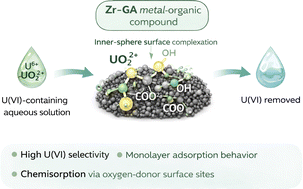
In this study, a zirconium-gallic acid metal–organic compound (Zr-GA) was synthesized via a hydrothermal method and evaluated as a high-performance adsorbent for uranium(VI) removal from aqueous solutions. Comprehensive physicochemical characterization confirmed the formation of a mesoporous sorbent with a highly functionalized surface rich in oxygen-donor groups such as carboxylates and phenolics, enabling a high density of reactive binding sites. Batch experiments were conducted to assess the effects of pH, dosage, contact time, temperature, and uranium concentration, with all variables showing strong influence on sorption efficiency under 0.1 M nitric acid conditions. Kinetic studies followed the pseudo-second-order model, suggesting a chemisorption-controlled mechanism, while intraparticle and Boyd diffusion analyses revealed a two-stage process dominated by film diffusion followed by internal pore transport. Isotherm modeling confirmed monolayer sorption behavior with a maximum capacity of 107.2 mg g−1, as best described by the Langmuir and Sips models. Thermodynamic data (ΔG° < 0, ΔH° = −71.4 kJ mol−1, ΔS° < 0) revealed a spontaneous, exothermic, and entropy-reducing process, consistent with strong surface complexation. Desorption studies showed >94% U(VI) recovery using dilute acids, with the Zr-GA retaining >90% efficiency over five reuse cycles. Application to real radioactive liquid waste confirmed the material's selectivity and robustness, achieving 89.7% U(VI) removal under acidic, competitive conditions. These results highlight Zr-GA as a structurally stable, regenerable, and highly effective adsorbent for uranium remediation in both laboratory and field-relevant aqueous systems.
 Please wait while we load your content...


