


 PLATFORM UPDATE:


Sahara Desert sand “Chitligsan”: characterisation and assessment of antibacterial activity and cytotoxicity

Abstract
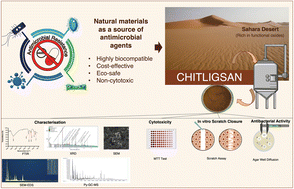
Antimicrobial resistance presents a significant global health concern, rendering antimicrobial therapies less effective and complicating the management of infectious diseases. To address this challenge, the utilisation of natural alternatives, particularly metal oxide-based nanomaterials, has emerged as a promising strategy due to their antimicrobial activity and favourable physicochemical properties, without inducing antimicrobial resistance. In this study, Chitligsan, a naturally occurring hybrid compound extracted from the sand of the Sahara Desert, was characterised and evaluated in terms of its antimicrobial activity and biocompatibility. The elemental and mineral composition of Chitligsan was investigated using FTIR, SEM-EDS, XRF, XRD, and Py-GC-MS analyses. The results indicated the presence of diverse metal oxide compounds, including Fe2O3, CaO, and SiO2. Additionally, the antimicrobial efficacy of Chitligsan against several pathogenic bacteria, namely Pseudomonas aeruginosa, Escherichia coli, and Staphylococcus aureus, was evaluated. The cytotoxic potential of Chitligsan was assessed in the L929 fibroblast cell line using a scratch assay. Chitligsan exhibited antimicrobial activity against all tested bacterial species, as demonstrated by growth inhibition in the agar well diffusion assay. Furthermore, Chitligsan showed a high level of cytocompatibility, with cell viability exceeding 90%, as confirmed by the MTT assay. In conclusion, owing to its unique hybrid composition, low-cost availability, and dual antibacterial–biocompatible profile, Chitligsan may offer a novel platform for the development of sustainable antimicrobial systems.
 Please wait while we load your content...


