


 PLATFORM UPDATE:


A new dioxo-molybdenum complex derived from an amide-based imine derivative for the fluorescence recognition of Zr(iv) with phosphatase activity
 *b
and
Debasis
Das
*a
*b
and
Debasis
Das
*a
Abstract
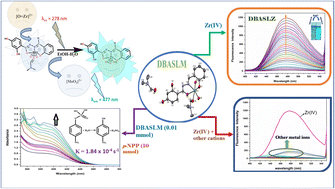
An amide-imine conjugate, namely, 2,4-dihydroxy-benzoic acid-(2-hydroxy-benzylidene)-hydrazide [DBASL], was prepared from 2,4-dihydroxy benzoic acid hydrazide (DBA) and salicylaldehyde and further used for the synthesis of the corresponding Mo(VI) complex (DBASLM). The structure of DBASLM was established using different spectroscopic techniques and confirmed by single-crystal X-ray diffraction (SC-XRD) analysis. Interestingly, DBASLM selectively recognizes ZrO2+ via ‘turn-on’ sky-blue emission, with notably strong binding constant of 1.3 × 10⁵ M−1. The proposed sensing mechanism involves the displacement of Mo(VI) from DBASLM by ZrO2+. DFT studies also corroborate the interactions and allow the exploration of the associated orbital energy parameters. Silica-immobilized DBASLM is very effective for the solid-phase extractive separation/recovery of ZrO2+. A DBASLM-impregnated paper strip allows the low-cost, facile and instant optical detection of ZrO2+ in real samples. DBASLM promotes phospho-ester bond hydrolysis in p-nitrophenyl phosphate (p-NPP), which is one of the vital biological processes that play a key role in the destruction of poisonous organo-phosphorus substrates such as pesticides and insecticides used in the agricultural industry.
 Please wait while we load your content...


