


 PLATFORM UPDATE:


Preparation of biodiesel catalyzed by supported ionic liquids
 *abc
*abc
Abstract
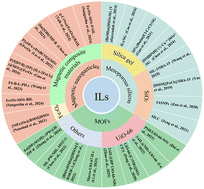
Biodiesel is an alternative fuel to fossil fuels exhibiting properties such as high biodegradability, renewability and non-toxicity. Therefore, biodiesel is of significant importance for sustainable development. Supported ionic liquids (SILs) combine the superior properties of ionic liquids with the stability of solid materials, making them ideal candidates for producing biodiesel through transesterification. Ionic liquids are immobilized onto heterogeneous solid materials to form SILs through physical adsorption or chemical bonding methods. This catalyst offers advantages such as providing uniform active sites, enabling efficient utilization of metals, and facilitating facile separation from reactants and products. Ultimately, this catalyst can achieve the efficient production and sustainable application of biodiesel. This paper systematically reviews the recent research progress in immobilized ionic liquids on different carrier materials (such as silica, metal–organic frameworks, and magnetic nanoparticles) and their use as catalysts for biodiesel production. Subsequently, its catalytic performance in the preparation of biodiesel was comprehensively summarized. Finally, the challenges faced in this field and future development directions were proposed.
- This article is part of the themed collection: 2026 Focus and Perspective articles
 Please wait while we load your content...


