


 PLATFORM UPDATE:


Carbon-coated Ni/Al2O3 as high-efficiency catalysts for the hydrogenation of furfural to furfuryl alcohol
Abstract
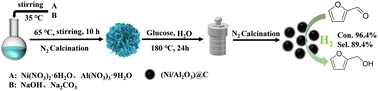
In this study, the catalytic hydrogenation process of furfural to furfuryl alcohol was evaluated over newly designed (Ni/Al2O3)@C catalysts. Using Ni2Al-layered double hydroxide (Ni2Al-LDH) as the precursor, NiO/Al2O3 was obtained via high-temperature calcination. Glucose was used as the carbon source. The (Ni/Al2O3)@C catalysts were fabricated through a hydrothermal treatment and calcination under a N2 atmosphere using different glucose-to-NiO/Al2O3 mass ratios. Several characterizations, including XRD, TGA, SEM, BET, TEM, HRTEM and XPS, were employed to characterize the microstructural features and chemical constituents of the prepared catalysts. It was found that the Ni nanoparticle size of Ni/Al2O3 was 7.2 nm, whereas that of carbon-coated Ni/Al2O3 catalysts was smaller. It was indicated that modification with carbon coating could effectively enhance the dispersibility of Ni active components and inhibit their oxidization. In addition, the performance of the carbon-coated Ni/Al2O3 catalysts was affected by the reaction solvent, carbon content and calcination temperature. Under the optimal conditions, the furfural conversion and furfuryl alcohol selectivity reached 96.4% and 89.4%, respectively, over the (Ni/Al2O3)@C-2-500 catalyst. The (Ni/Al2O3)@C-2-500 catalyst proved to be reusable during multiple recycling runs. The high catalytic performance of (Ni/Al2O3)@C-2-500 could be due to the smaller Ni nanoparticles, larger specific surface area, greater surface oxygen vacancies and enriched Ni0.
 Please wait while we load your content...


