


 PLATFORM UPDATE:


Bio-derived steam-activated porous carbon with a high specific surface area as a sustainable metal-free electrocatalyst for hydrogen evolution applications

Abstract
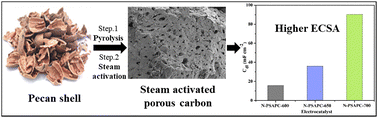
Bio-derived materials can serve as effective and low-cost alternatives to traditional electrocatalysts for the hydrogen evolution reaction (HER). In this study, a facile and environmentally benign approach was employed to synthesize nitrogen self-doped pecan shell-derived steam-activated porous carbon (N-PSAPC). The steam activation process alters the surface properties of carbon materials considerably, specifically their defects and porosity. The high specific surface area (879 m2 g−1) and pore volume (0.48 cm3 g−1) were attained with steam activation at 700 °C. Steam generates hydroxyl radicals and hydrogen, which react with carbon to form internal pores, increasing the surface area. Multi-walled carbon nanotubes were added as conductive agents for the electrode materials. The resulting N-PSAPC catalyst shows excellent HER performance with a low overpotential of 141.4 mV at 10 mA cm−2 in alkaline media and exhibits outstanding cycle performance after 5000 CV cycles. The lower charge transfer resistance and improved electrochemically active surface area of N-PSAPC-700 are the key reasons for attaining the efficient electrocatalytic activity. As a cathode for overall water splitting, it achieves a cell voltage of 1.62 V at 10 mA cm−2. This work highlights steam activation as an effective, environmentally friendly approach for producing high-performance, metal-free HER electrocatalysts.
 Please wait while we load your content...


