


 PLATFORM UPDATE:


Control of the morphology and reactivity of MIL-100(Fe): effect of synthesis variables on NOx removal
 *a
*a
Abstract
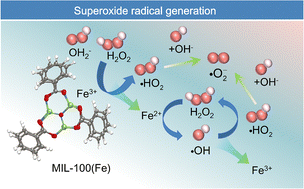
In this study, we synthesized a metal–organic framework (MOF) material, MIL-100(Fe), under various conditions and evaluated its performance as a catalyst for activating the H2O2/NaOH system to efficiently remove nitrogen monoxide (NOx). However, the influence of different synthesis conditions on the NOx removal efficiency of this material remains unclear. To investigate this, we varied the iron source, precursor ratio, solvent, hydrothermal temperature, and reaction time during catalyst synthesis to control the material's composition, crystallinity, particle size, specific surface area, and iron content. Using FeCl2 as the iron source, a FeCl2 to H3BTC ratio of 1 : 2, H2O as the solvent, and a hydrothermal temperature of 180 °C for 12 hours, the optimal MIL-100(Fe) was synthesized, which exhibited the highest NOx removal performance. The maximum NOx removal capacity of MIL-100(Fe) was 22.97 mmol L−1, corresponding to an efficiency of 86.91%. This study offers new insights into the use of MIL-100(Fe) synthesized under different conditions as a Fenton-like catalyst for NOx removal. We found that an efficient MIL-100(Fe) catalyst requires a combination of larger octahedral particles and irregularly shaped small particles at their boundaries, resulting in a larger specific surface area, abundant exposed iron active sites, and moderate crystallinity.
 Please wait while we load your content...


