


 PLATFORM UPDATE:

Preparation and evaluation of lactoferrin-modified curcumin long-circulating nanoliposomes for hypoxic brain injury therapy
 c
Zanhua
Liu
*f
c
Zanhua
Liu
*f
Abstract
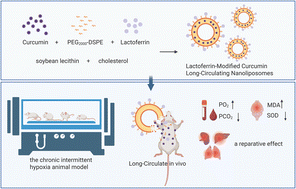
Nanoformulations of curcumin (Cur) are advanced but still have shortcomings in terms of fast in vivo elimination, inefficient delivery and biodistribution of drugs to target sites. Herein, Cur liposomes (Cur-L), Cur long-circulating liposomes (Cur-LCL), and lactoferrin (Lf)-modified Cur long-circulating liposomes (Lf-Cur-LCL) were prepared using ethanol injection before application in hypoxic brain injury. Hematoxylin-eosin (HE)-stained pathological sections of the brain, liver, and spleen were examined to assess the extent of tissue damage and efficacy of treatments. Additionally, immunohistochemical staining of brain tissue was performed to assess the expression of key biomarkers involved in apoptosis. The prepared Cur-L, Cur-LCL and Lf-Cur-LCL displayed smaller particle sizes, good polymer-dispersity index, and stability over one week. The in vitro release behavior of Cur-L, Cur-LCL, and Lf-Cur-LCL was significantly better than that of Cur, with Cur-LCL and Lf-Cur-LCL showing better sustained release effects. Also, Cur-L, Cur-LCL, and Lf-Cur-LCL significantly prolonged the retention time of Cur in vivo with Lf-Cur-LCL significantly increasing Cur content in brain tissues. Furthermore, Cur-L, Cur-LCL, and Lf-Cur-LCL increased the partial pressure of oxygen and decreased the partial pressure of carbon dioxide in chronic intermittent hypoxia model mice. These formulations also elevated levels of superoxide dismutase and reduced malondialdehyde levels in the model group. Furthermore, they also demonstrated a reparative effect on liver, brain, and spleen damage induced by the model, with Lf-Cur-LCL showing the most significant therapeutic effect. In conclusion, the prepared Lf-Cur-LCL exhibited brain-targeting properties and showed considerable potential for treating brain diseases, thus providing theoretical support for clinical development and application of curcumin.
 Please wait while we load your content...


