


 PLATFORM UPDATE:


Electrochemical C(sp2)–H deuterodifluoromethylation of quinoxalinones and 2H-indazoles with CF2DSO2Na
 *a
and
Zhenlu
Shen
*ab
*a
and
Zhenlu
Shen
*ab
Abstract
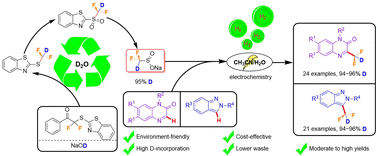
With the growing enthusiasm for green chemistry, the efficient and convenient introduction of the deuterodifluoromethyl group (–CF2D) into drug molecules has become a research hotspot of great interest. Herein, a green and efficient electrochemical method for C(sp2)–H deuterodifluoromethylation of quinoxalinones and 2H-indazoles with CF2DSO2Na has been developed. This strategy utilizes a mixed solution of acetonitrile/water at 25 °C without any transition-metal catalysts or stoichiometric oxidants. The value of this method is underscored by a wide range of substrates (45 examples), high yields (up to 84%) and the incorporation of high levels of deuterium (approximately 96%). Radical trapping and cyclic voltammetry experiments indicate that a radical pathway is involved during the reaction. Moreover, the deuteriation step in the synthesis of CF2DSO2Na has been achieved using a NaOD/D2O solution, which enables the reuse of D2O, reducing waste and further enhancing the commercial potential of this method.
 Please wait while we load your content...


