


 PLATFORM UPDATE:


Glycerol electrolytes for safer and more sustainable sodium ion batteries

Abstract
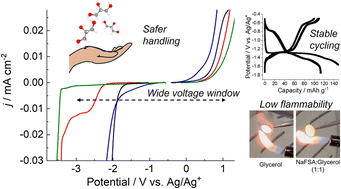
To move toward greener, less toxic and less flammable solvents for sodium-ion batteries (SIBs), we demonstrate the first glycerol-based electrolytes for battery applications. Mixtures were prepared using glycerol with Na[N(SO2F)2] (NaFSA) up to a molar ratio of 1 : 0.8 (NaFSA : glycerol) maintaining a neat liquid state, nonflammability, and good electrochemical stability compared with other green solvents like water. Furthermore, even higher electrochemical stability was observed for mixtures containing urea, e.g. NaFSA : glycerol : urea at 1 : 0.5 : 0.5, up to 4.3 V. Despite the protic nature of glycerol, we observe reasonable stability in contact with Na metal and indications of reversible plating/stripping for potential applications toward high-voltage batteries. Next, we target the combination of relatively dilute 1 : 5 NaFSA : glycerol electrolytes with metal-free organic electrodes for reducing the excess electrolyte recently applied in aqueous batteries. Due to the high innate viscosity of glycerol, we find that even at relatively low electrolyte concentrations major improvements in cyclability and dissolution are observed compared with similar concentration aqueous electrolytes. We further show stable charge/discharge cycling over 250 cycles. Overall, these electrolytes show interesting opportunities for optimization to maximize performance while moving toward safer and greener next-generation batteries.
 Please wait while we load your content...


