


 PLATFORM UPDATE:


The importance of chemical reagents for the electric vehicle battery supply chain

Abstract
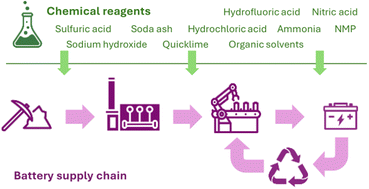
Batteries are essential for climate change mitigation, yet their supply chains face persistent challenges related to raw material supply risks and sustainability concerns. Here, we address an often-overlooked aspect of the battery supply chain: the extensive use of chemical reagents in raw materials processing, cathode synthesis, and cell recycling. Using a life cycle approach, we quantified the reagent intensity of eight lithium-ion and next-generation battery cell chemistries, defined as the total amount of reagents required across the supply chain to produce 1 kWh of battery cell capacity, and estimated the associated life cycle greenhouse gas (GHG) emissions and incurred costs. We found pronounced but heterogeneous reagent intensities, ranging from 7 to 39 kg per kWh of cell capacity. With growing battery demand, reagent requirements are projected to rise sharply, potentially reaching 14–26% of current production volumes for sulfuric acid, 4–8% for quicklime, 8–14% for sodium hydroxide, 5–43% for hydrochloric acid, and 3–14% for soda ash by 2040. Sulfuric acid, the most consumed reagent, creates a critical dependency on the fossil fuel industry and faces future availability risks as fossil fuel use declines, compounded by the current lack of viable substitutes in minerals leaching. We further show that reagents are non-negligible contributors to the carbon footprint and production costs of battery cells, accounting for 9–13% and 5–8%, respectively. Greener production methods for chemical reagents represent a key opportunity to further reduce the carbon footprint of batteries.
- This article is part of the themed collections: 2026 Green Chemistry Reviews and Green Chemistry Emerging Investigators Series
 Please wait while we load your content...


