


 PLATFORM UPDATE:


The multiple transformed ZnO ENPs in the aquatic environment: the mechanisms of formation and ecotoxicological impact

Abstract
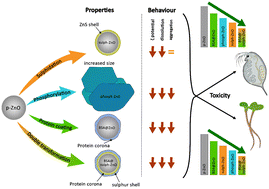
The widespread use of ZnO engineered nanoparticles (ENPs) raises concerns about their environmental release and toxicity. In natural settings, metal-based ENPs can undergo chemical changes or interact with biological molecules, forming a bio-corona that alters their properties and behavior, which likely affects toxicity. Most research has focused on single transformations, neglecting combined effects. This study is the first to explore how combined chemical–biological transformations of ZnO ENPs influence toxicity to Daphnia magna (mobility at 0.38–6 mg Zn per L) and Lepidium sativum (root growth at 20–320 mg Zn per L). It examined chemical transformations (sulphidation/phosphorylation), biological transformations (protein corona formation), and combined chemical–biological transformations (sulphidation plus protein corona formation). Chemical treatments partially converted ENPs to sulphur or phosphorus species through surface oxidation. Protein corona formation on sulphided ENPs unchanged speciation but altered protein conformation. Depending on the transformation type, an increase or decrease in the particle size and surface area of ENPs was observed. The transformation-driven properties of ZnO ENPs affected the aggregation and dissolution behavior. Importantly, all transformed ENPs showed 20–90% reduced toxicity compared to pristine ENPs. The greatest reduction was seen in daphnia mobility with dual-transformed ENPs, while phytotoxicity reductions were similar across single and combined transformations. The findings suggest that lower Zn ion release, alongside changes in surface charge and aggregation, reduces ENP toxicity. This highlights the need to consider such transformations in environmental risk assessments.
 Please wait while we load your content...


