


 PLATFORM UPDATE:

The integrative application of AMF and CaO nanoparticles promotes AMF symbiosis and modulates redox and photosynthetic pathways to alleviate NaCl-stress effects in rice

Abstract
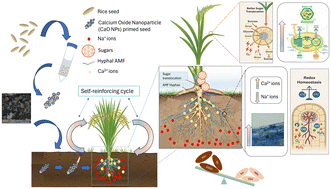
The present study investigates the potential of seed priming with calcium oxide nanoparticles (CaO NPs) to enhance arbuscular mycorrhizal fungal (AMF) colonization, helpful to mitigate NaCl stress in rice (Oryza sativa L.) under controlled pot culture conditions. Rice seeds were initially surface sterilized and primed with CaO NPs (80 ppm). The primed seeds were grown with or without AMF inoculation in soil pre-treated with 175 mM NaCl to impose NaCl stress. Non-stressed and untreated plants served as controls. The combined AMF and CaO NP treatment increased root mycorrhizal colonization by 32% and soil flavonoid exudation by 33% (P < 0.05). Under NaCl stress, reducing sugars increased by 149% and non-reducing sugars decreased by 66%; however, these changes were moderate in plants subjected to AMF and CaO NP co-application treatment, where reducing sugars increased only 110% and non-reducing sugars decreased by 38%. Antioxidant regulation also improved, with reduced glutathione and total glutathione increasing by 139% and 168%, respectively, along with a higher net photosynthetic rate compared with the control. Furthermore, co-application improved ionic homeostasis, with a 35% increase in Ca2+ uptake and 58% reduction in Na+ accumulation compared to NaCl-stressed plants. Collectively, these results demonstrate that CaO NP seed priming amplifies AMF symbiosis both structurally and functionally, safeguarding photosynthetic efficiency and enhancing rice tolerance to salinity. This synergistic bio–nanotechnological approach offers a sustainable strategy for improving crop resilience in saline environments.
 Please wait while we load your content...


