


 PLATFORM UPDATE:


Amino-modified halloysite nanotube-supported nickel catalysts for the efficient reductive amination of biomass aldehydes and ketones

Abstract
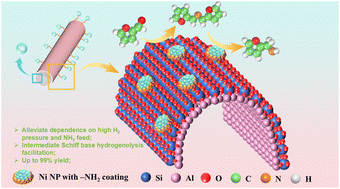
The reductive amination of biomass aldehydes and ketones to synthesize primary amines is a highly promising strategy for the conversion of biomass into value-added products. In this study, non-precious metal Ni was loaded onto halloysite nanotubes (HNTs) modified by gamma aminopropyltriethoxysilane (APTES) using an impregnation-chemical reduction method to prepare a series of efficient nickel-based catalysts (denoted as Ni-WHNT) with different Ni loadings. The compositions and structures of the prepared catalysts were characterized by XPS, TEM, SEM, and so on. The Ni-WHNT catalyst with 10 wt% Ni facilitated the efficient synthesis of furfurylamine (FAM) in the reductive amination of biomass furfural (FAL) and displayed a FAM yield of 99% under mild conditions (90 °C, 0.5 MPa H2, and 0.3 MPa NH3). Moreover, the catalyst exhibited a broad scope of various other aldehyde and ketone substrates and could be recycled up to 5 times without any significant loss of activity. Additionally, the catalytic mechanism and structure–activity relationship were investigated.
- This article is part of the themed collection: Dalton Transactions: HOT Articles
 Please wait while we load your content...


