


 PLATFORM UPDATE:


Twist, grind, translocate: pepper-mill dynamics of MSPA protein pore during ssDNA transport

Abstract
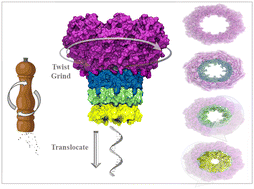
DNA translocation through membrane-bound protein nanopores lies at the heart of both fundamental biological processes and next-generation sequencing technologies. Among these nanopores, Mycobacterium smegmatis porin A (MSPA) has emerged as a robust β-barrel protein with a narrow constriction suitable for single-molecule sensing. However, the atomic-scale mechanism by which DNA interacts and couples with the dynamic motions of the pore remains poorly understood. In this work, we combine atomistic molecular dynamics (MD) simulations with dimensionality reduction and cross-correlation analyses to elucidate the mechanism of single-stranded DNA (ssDNA) translocation through MSPA. Our results reveal a previously unrecognized “pepper-mill”-like motion of MSPA during the translocation of ssDNA. This collective domain motion plays a crucial role in modulating analyte-pore interactions and influencing the dynamics of DNA passage. Furthermore, our scheme provides a generalizable and data-driven strategy for extracting mechanistic insights from large-scale biomolecular simulations. Together, these findings highlight the potential of data-driven computational strategies to guide nanopore engineering and accelerate the development of next-generation sequencing and biosensing technologies.
- This article is part of the themed collection: Advances in computational chemistry and catalysis: Honouring Jumras Limtrakul’s 72nd birthday
 Please wait while we load your content...


