


 PLATFORM UPDATE:

A candidate reference measurement procedure for aldosterone measurement in human serum and urine on the basis of isotope dilution liquid chromatography-tandem mass spectrometry
 a
a
Abstract
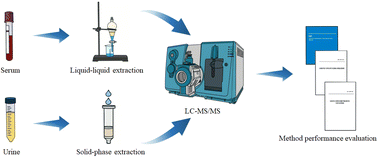
Accurate quantification of aldosterone is crucial for screening and diagnosing primary aldosteronism. In clinical laboratories, chemiluminescence is commonly used for aldosterone measurement. However, significant variability exists between different measurement systems. A complete reference system is needed to achieve comparable results across laboratories. Therefore, we developed a candidate reference measurement procedure based on liquid chromatography-tandem mass spectrometry for the quantitative determination of aldosterone in serum and urine. In this study, aldosterone-d8 was used to prepare standard solutions. Serum and urine aldosterone samples were extracted via liquid–liquid extraction and solid-phase extraction, and the steps in the pre-treatment process were optimised. Chromatographic separation was performed on a ZORBAX Eclipse XDB-C18 column, and quantitative detection was carried out in negative mode via an electrospray ionization source. The performance of the method was also evaluated. Serum aldosterone exhibited linearity in the range of 4.5–3902 pg mL−1, with a limit of quantification (LOQ) of 3.1 pg mL−1. The coefficient of variation (CV) ranged from 0.5% to 1.2%. Urine aldosterone showed linearity in the range of 10–998 pg mL−1, with a LOQ of 9.9 pg mL−1. The CV ranged from 1.1% to 1.4%. The recoveries of both samples were within the range of 95–105%. This method meets the analytical requirements of a reference measurement procedure, reduces the use of hazardous chemicals during sample preparation, and may serve as a candidate reference method for the accurate quantification of aldosterone in serum and urine samples in the laboratory.
 Please wait while we load your content...


