


 PLATFORM UPDATE:


Systematic evaluation of pre-analytical variables on synovial fluid metabolomic profiles using GC-ToF-MS and UHPLC-MS
 *abc
Royston
Goodacre,
c
*abc
Royston
Goodacre,
c
Abstract
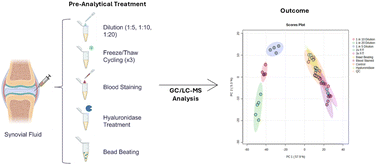
Synovial fluid is a clinically valuable biofluid for studying joint diseases through metabolomic analysis. However, given the viscoelastic nature of this biofluid its analysis is challenging. Indeed, the lack of standardised pre-analytical processing protocols for synovial fluid metabolomics potentially introduces significant variability that can compromise data reliability and hinder the application/interpretation of results. This study systematically assesses how common sample handling variables including sample dilution, freeze–thaw cycling, blood staining and viscosity reduction (via hyaluronidase digestion and bead beating) affect the metabolomic profile of synovial fluid. Using a combination of untargeted GC-ToF-MS and UHPLC-MS (in both electrospray ionisation modes; ESI+ and ESI−) for the profiling of both polar and non-polar metabolites, we evaluated changes in detectable metabolite numbers, small molecule class distribution and relative abundances in a collection of synovial fluid samples. Sample dilution had the most pronounced impact on metabolite read-outs, significantly reducing detectable metabolite numbers. Blood staining introduced distinct metabolites and resulted in the artificial increase in the relative abundance of three metabolites including adenine, hypoxanthine and 4-fluoro-DL-tryptophan. Bead beating enhanced the detection of a broad range of lipid species particularly in the UHPLC ESI+ analysis. Freeze–thaw cycling and hyaluronidase treatment had minimal effects on overall metabolite quantities or composition. These findings underscore the importance of optimising and standardising synovial fluid sample handling to ensure reproducibility and to enable accurate interpretation of metabolomic data for the study of disease mechanisms and biomarker discovery.
 Please wait while we load your content...


