


 PLATFORM UPDATE:


Pluronic nanoparticle-modified modular bacterial robots for therapy of tumors and inflammatory bowel disease
 *a
and
Decheng
Wu
*a
*a
and
Decheng
Wu
*a
Abstract
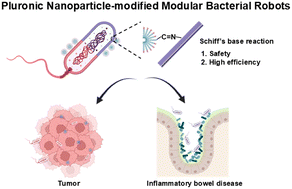
Bacterial-mediated drug delivery has emerged as a promising strategy for disease treatment, leveraging bacteria's innate ability to penetrate biological barriers and target diseased tissues. However, existing bacteria–nanoparticle hybrid systems often suffer from complex fabrication, biosafety concerns, and limited scalability. To address these challenges, we developed Pluronic nanoparticle-modified modular bacterial robots through a facile Schiff base reaction between aldehyde-functionalized PF127 nanomicelles and bacterial surfaces. This modular design enables efficient loading of both hydrophilic and hydrophobic drugs, with broad compatibility across Gram-negative and Gram-positive bacterial strains. In a breast cancer model, the robots delivered chemotherapeutic payloads to tumors, significantly inhibiting progression. In the case of inflammatory bowel disease (IBD), the platform mitigated colitis symptoms, reduced proinflammatory cytokines, and restored gut microbiota homeostasis. The versatility, low toxicity, and customizable drug-loading capacity of this system highlight its potential as a scalable platform for targeted therapy of oncology and inflammatory diseases.
 Please wait while we load your content...


