


 PLATFORM UPDATE:


Dynamic multistage hydrogel with auto-adjusting networks for sequential anti-infection, anti-inflammation, and angiogenesis in infected wound regeneration

Abstract
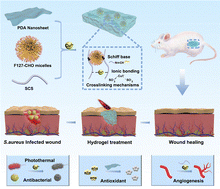
Wound healing, particularly in bacterial-infected wounds, is a complex and dynamic process that requires tailored interventions at different physiological stages. Addressing this challenge in clinical settings necessitates the development of advanced wound repair materials capable of providing sequential treatment to promote effective wound regeneration. Herein, we present an auto-regulating hydrogel, which is designed specifically to facilitate the stepwise repair of infected wounds through its antibacterial, anti-inflammatory, and angiogenic properties. This hydrogel is constructed by integrating dynamic imine bonds, ionic complexation, and hydrophobic interactions, and is composed of sulfonated chitosan (SCS), polydopamine (PDA) nanosheets, aldehyde-terminated Pluronic F127 (F127-CHO), and copper ions (Cu2+), which is termed an FSCP hydrogel. The FSCP hydrogel sequentially targets each wound healing stage. During the initial stage, PDA nanosheets act as a near-infrared (NIR) photothermal agent to eliminate bacteria, while also scavenging free radicals to reduce inflammation. At later stages, upon controlled NIR irradiation, the hydrogel's networks auto-regulate to enable pulsatile release of Cu2+ and SCS, which fosters angiogenesis and sustains tissue regeneration. Experimental results confirm that this hydrogel effectively combats bacterial infection and mitigates excessive ROS during the inflammatory phase, subsequently enhancing angiogenesis to stimulate cell proliferation and tissue reconstruction. By offering a sequential, stage-specific therapeutic strategy, the FSCP hydrogel represents a novel and versatile platform for the treatment of bacterial-infected wounds, meeting the diverse and evolving needs of wound healing in clinical settings.
 Please wait while we load your content...


