


 PLATFORM UPDATE:


Controllable ion-release separators: in situ engineering of zincophilic/hydrophobic interfaces and solvation regulation for durable Zn metal anodes

Abstract
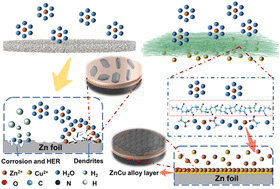
Aqueous zinc-ion batteries (AZIBs) are popular for their safety, affordability, and environmental friendliness. However, irreversible electrochemical processes at the zinc anode limit their longevity, especially in mildly acidic electrolytes. Traditional approaches including protective artificial interfaces and electrolyte engineering with functional additives, face limitations due to rapid electrolyte consumption and diminished regulatory effectiveness over time. To overcome these challenges, we have developed a thin copper acetate/polyacrylonitrile composite (CPAN) fibrous film (37 μm) inspired by diffusion-controlled drug release systems. This innovative separator ensures the continuous and controllable release of copper ions (Cu2+) and acetate ions (Ac−). The Cu2+ promotes the formation of a zincophilic–hydrophobic Cu/Zn alloy interface on the zinc anode, effectively suppressing dendrite growth and hydrogen evolution. The Ac− in conjunction with the cyano groups in PAN, regulates the solvation structure of Zn2+ and accelerates its desolvation. As a result, the CPAN separator significantly enhances the reversibility of zinc stripping and plating, allowing stable cycling for over 1500 hours. The assembled MnO2‖Zn pouch cell exhibits a high capacity of 45 mAh and stable cycling for over 300 cycles even under lean electrolyte conditions (E/C ratio = 25.88 μL mAh−1) and limited Zn supply (N/P ratio = 3).
 Please wait while we load your content...


