


 PLATFORM UPDATE:


Low temperature and fast response TEA sensors based on n–n WO3/In2O3 heterojunctions

Abstract
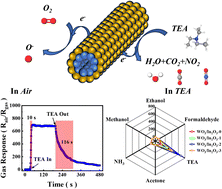
Due to the unique properties of heterojunction interfaces, heterojunction materials have broad application prospects in gas sensors. In this study, we synthesized In2O3 microrods through direct calcination of MIL-68(In) under ambient conditions. Subsequently, WO3/In2O3 n–n heterojunction composites were built via a solvothermal method. The sensors fabricated with this heterojunction demonstrated exceptional TEA sensing capabilities, such as excellent selectivity and stability, a high response value of 678.43 to 20 ppm TEA, a fast response time (11 s) and a low operating temperature of 160 °C. The increased sensing performance is attributed to the improved specific surface area, distinct barrier-controlled electron transport present in n–n type heterojunctions, and the unique selectivity of WO3 to TEA. This work not only offers a strategy for creating heterojunction-rich sensing materials, but also an efficient way for TEA detection.
 Please wait while we load your content...


