


 PLATFORM UPDATE:


Discovering a green pesticide candidate for controlling bacterial plant disease: 1,2,3,4-tetrahydro-β-carboline as a potential biofilm inhibitor
 *ad
*ad
Abstract
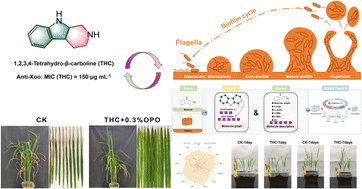
Xanthomonas oryzae pv. Oryzae, result in rice bacterial blight, is the most severe bacterial disease affecting rice, and in certain regions, it is considered the most critical disease overall, with the potential to reduce yields by as much as 50%. It is difficult to control rice bacterial blight and lacking of pesticides. 1,2,3,4-Tetrahydro-β-carboline (THC) and their analogues show a diverse range of activities; however, research specifically focusing on THC remains limited, particularly concerning its antibacterial properties. Given its promising characteristics, THC holds potential for development as an environmentally friendly green pesticide. These outcomes reveal that THC signally inhibits both the cell growth and biofilm formation, thereby reducing its pathogenicity. Consequently, THC holds promise as a novel green pesticide aimed at targeting bacterial biofilms to effectively manage rice bacterial leaf blight.
 Please wait while we load your content...


